1. Which type of digital agency fits your organization?
Not every website partner has the same expertise or way of working. Which party fits best depends on your goals, the complexity of your website, and the support you need.
- Freelancer: an independent specialist who is often suitable for smaller websites or projects with a clear, defined scope.
- Digital agency: focuses primarily on the look and feel, user experience, and design of websites. Suitable when design and usability are key priorities.
- Boutique agency: a specialized agency with a compact team, personal collaboration, and deep expertise. Think, for example, of a WordPress agency that focuses on custom websites, complex integrations, and user-friendly content management for marketing teams.
- Full-service digital agency: offers services such as online marketing, branding, and campaigns in addition to website development. Interesting when you want to house multiple digital disciplines with one party.
The lines between these parties are not always sharp. Therefore, look primarily at the expertise, relevant projects, and the people who will actually be working on your website.
2. What should you look for when choosing a digital agency?
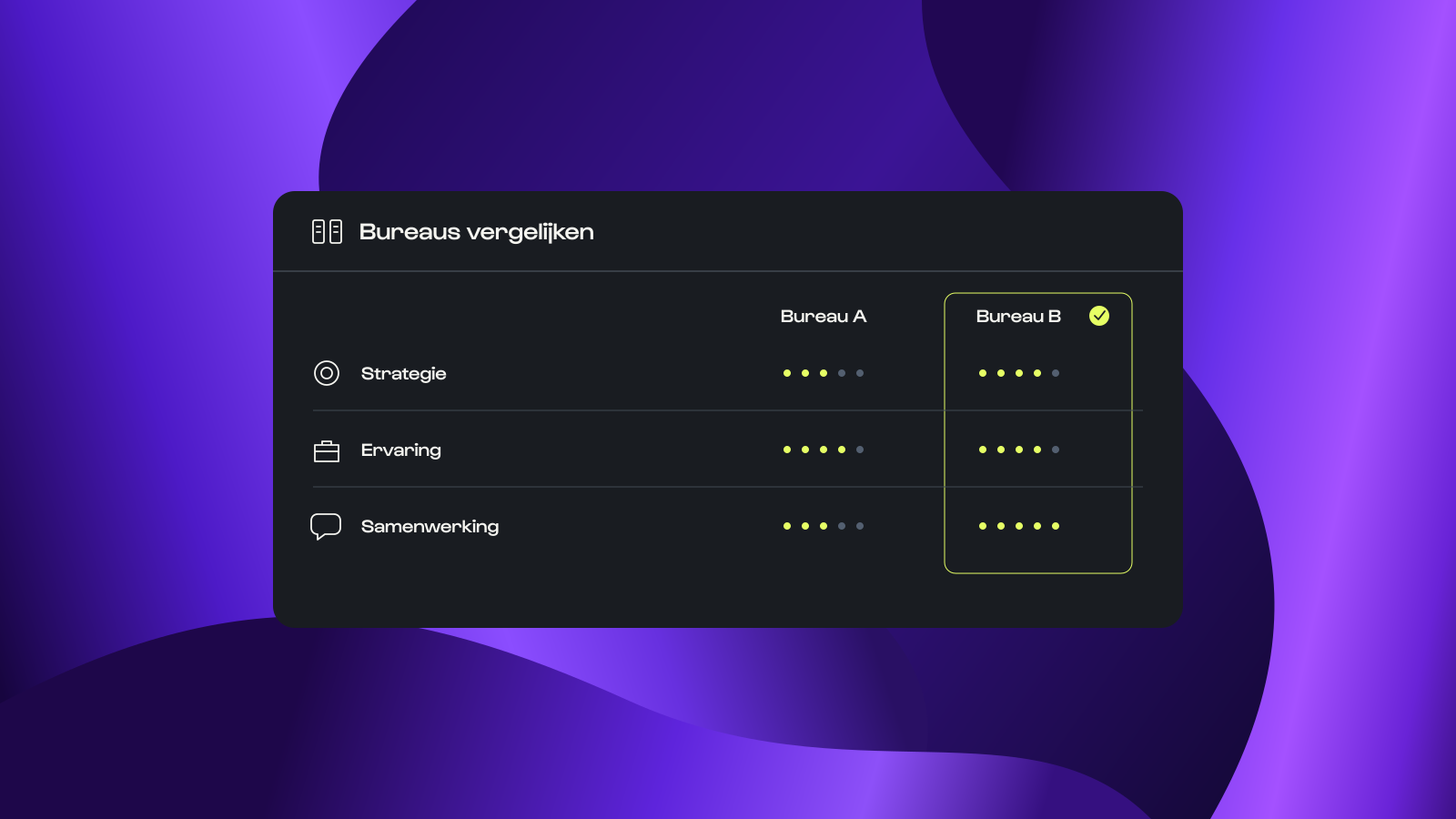
When comparing digital agencies, seven criteria are important.
Strategy and understanding of your organization
A good digital agency doesn't just ask which pages you want, but also researches your target audiences, commercial goals, and the role of the website within your marketing. Do they think along about conversion, information architecture, and future growth? Or do you mainly receive a quote based on the number of pages?
Relevant experience and cases
Don't just look at how websites look, but especially at what problems the agency has solved.
Does the agency have experience with similar organizations, multiple target groups, multilingual websites, or complex integrations? Also ask which tasks were actually performed by the agency itself.
Ease of use for your marketing team
A new website should not only work well for visitors, but also for the people who work with it. Can your marketing team independently create landing pages, adjust content, and publish campaigns? Or do you need a developer for every change?
Ask for a demonstration of the CMS during an introductory meeting. This way, you'll immediately discover what daily management looks like.
Technical flexibility and integrations
Investigate whether the website can grow with your organization. Think of integrations with CRM and ERP systems, marketing automation, vacancy software, and other business applications. Also discuss how new functionalities can be added later. A good technical solution combines proven software with custom work where it actually adds value.
Collaboration and communication
Ask who manages the project and who develops the website. Do you work directly with designers and developers? Is there a fixed point of contact? And how are feedback, planning, and decision-making organized? Clear communication prevents surprises during the project.
Ownership and independence
Check who will own the website, the content, and any custom code developed. Can you switch to another hosting party or developer later? Are there mandatory licenses or dependencies on a proprietary platform? A website should help your organization move forward, not make you unnecessarily dependent on a single supplier.
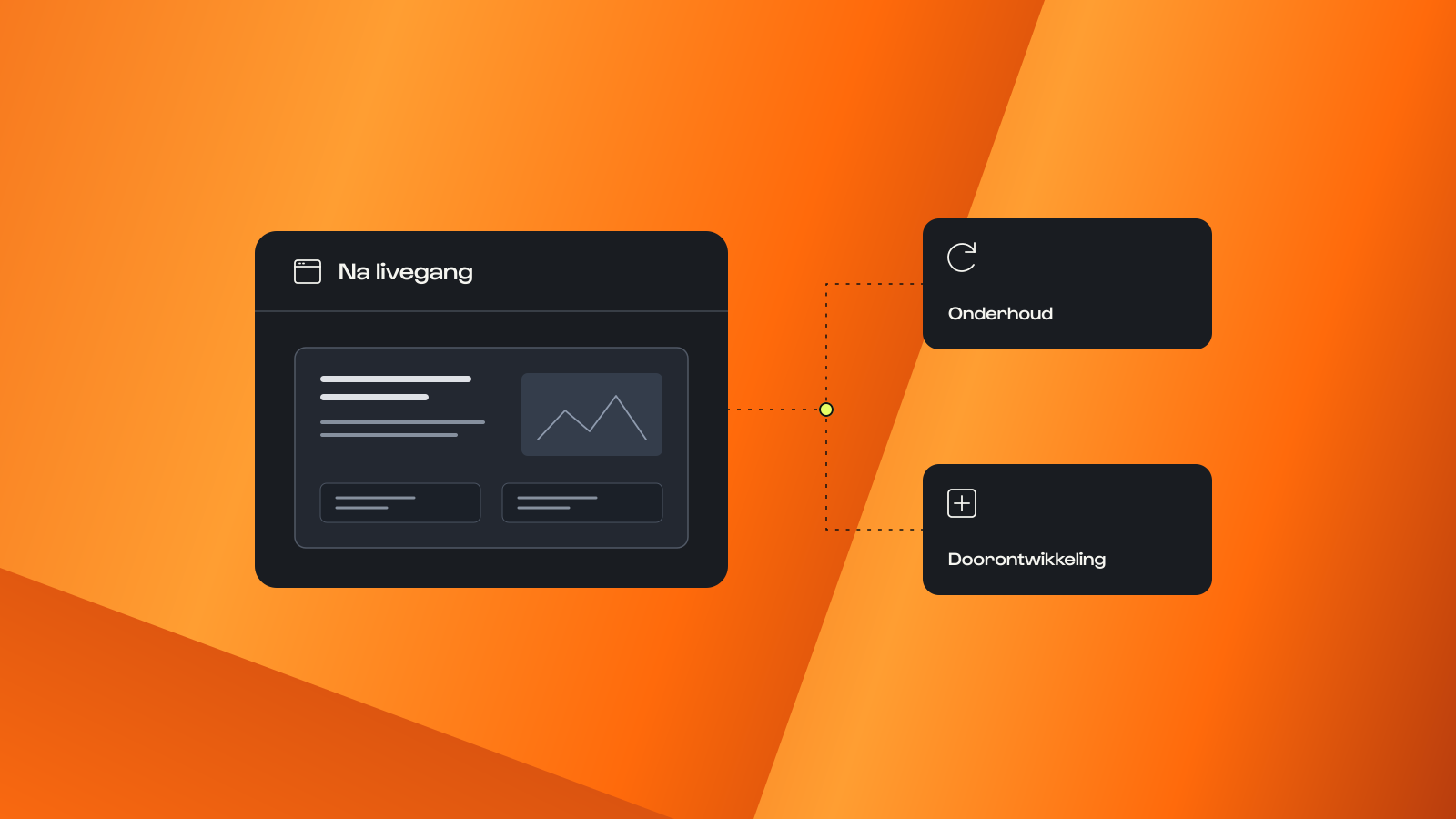
Maintenance and further development
A website is not finished after launch. Ask how the agency handles security updates, monitoring, technical support, and new requests. A good website partner also thinks about improvement and growth after delivery.
3. How do you compare quotes from digital agencies?
Don't just compare the total price, but especially what you get for that amount. Two quotes can differ greatly in strategy, design, technology, and support.
Therefore, check if the following components are included:
- Strategy, UX research, and information architecture.
- Custom design or an existing template.
- Development of pages, components, and functionalities.
- Content migration, SEO, and redirects.
- Integrations with external systems.
- Testing, training, and guidance during launch.
- Hosting, licenses, maintenance, and support.
A lower development price may seem attractive, but can ultimately turn out to be more expensive if your marketing team remains dependent on external support for small changes. Therefore, look at the total cost of ownership (TCO): the total costs of development, management, and further development over several years.
Want to know more about budgets? Also read our article on the costs of having a website made.
4. Which questions should you ask a digital agency?
During an introductory meeting, you can quickly discover if an agency fits your organization with these ten questions.
- Which similar websites have you developed?
- How do you determine the right structure and functionalities?
- Who will actually be working on our project?
- How much freedom will our marketing team have in the CMS?
- Which parts are developed as custom work?
- How do you realize integrations with our existing systems?
- How do you take SEO, GEO, accessibility, and performance into account?
- Which tasks fall outside the quote?
- Can we easily switch to another supplier later?
- How do you support us after the launch?
- Are you actively working with AI?
Pay attention not only to the answers, but also to the questions the agency asks you. A good web partner wants to understand what your organization needs before a solution is proposed.
5. How do you determine which digital agency fits you best?
When comparing multiple agencies, it helps to establish selection criteria beforehand. This prevents the choice from being based solely on price or personal preference. The scorecard below is an example for a marketing-driven SME organization.
| Selection criterion | Weighting |
| Understanding of organization and goals | 20% |
| Relevant experience and cases | 15% |
| Strategy, UX, and design | 15% |
| Technical quality and flexibility | 15% |
| Ease of use for the marketing team | 15% |
| Collaboration and communication | 10% |
| Costs and further development | 10% |
| Total | 100% |
Give each agency a score from 1 to 5 per criterion and multiply this by the corresponding weighting.
This creates a well-founded comparison. Adjust the weighting if, for example, integrations, international scalability, or accessibility are extra important for your organization.
6. Is a specialized WordPress agency a good choice?
For organizations that actively use their website for marketing and lead generation, a specialized WordPress agency can be interesting.
WordPress offers many possibilities for custom work, integrations, and independent content management. However, the final quality depends heavily on the technical setup and the way the CMS is developed.
At Studio Brabo, we therefore combine smart custom work with proven WordPress technology. This way, we develop websites that align with the wishes of marketing teams, without unnecessary technical complexity.
This means, among other things, that marketing teams can independently manage content and landing pages, while more complex functionalities and integrations are developed as custom solutions.
Read more about our approach as a WordPress agency or discover how we develop websites.
Conclusion: choose a website partner, not just a supplier
The best digital agency is not automatically the largest or cheapest agency. The right choice depends on your goals, the complexity of your website, and the way your organization wants to work with it.
Therefore, look beyond the design and the quote. Above all, assess whether an agency thinks strategically, has relevant experience, and can develop a website that will still align with your ambitions in a few years.
Having a new website developed?
At Studio Brabo, we help marketing teams and growing organizations with strategy, design, and custom WordPress development. We'd love to think along about the possibilities for your organization.