Why Core Web Vitals and WCAG are no longer an SEO trick
For a long time, search engine optimization revolved around keywords and backlinks. That era is largely behind us. Google now focuses on Page Experience, where the actual experience of the user is central.
This means that the technical architecture of a website directly influences commercial performance.
When the code structure is clean and the DOM remains limited, content can be interpreted more efficiently. Not only by search engines, but also by AI models. In practice, we see that this leads to faster processing, fewer interpretation errors, and a greater chance of citation within AI answers.
This directly relates to Generative Engine Optimization. AI systems prefer sources that are technically logical and consistently structured. A website with a lot of redundant code or complex structures is more often ignored or misunderstood.
Additionally, we see a clear relationship with paid performance. Technical quality affects the Quality Score in Google Ads. A slow or unstable website leads to higher costs per click. Technical debt is therefore not a technical problem, but a direct cost item.
What are Core Web Vitals and what does this mean in practice
Core Web Vitals are measurable indicators that Google uses to assess the user experience of a web page. This isn't about general speed, but about how a user actually experiences the website.
The three most important metrics are:
- Largest Contentful Paint (LCP): measures how quickly the most important element on the screen becomes visible to the visitor.
- Cumulative Layout Shift (CLS): measures visual stability during loading, to prevent buttons from jumping around while someone wants to click.
- Interaction to Next Paint (INP): measures the responsiveness of the interface for every interaction a user performs. It measures how quickly a website responds to interactions.
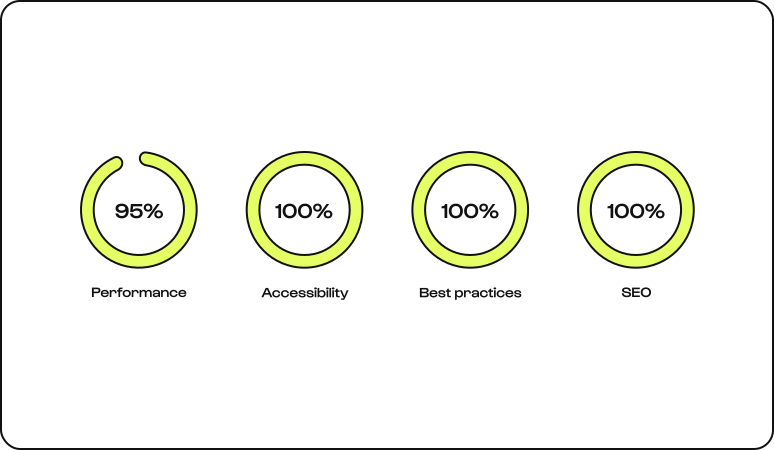
Tip: Via Google PageSpeed Insights you can gain immediate insight into how a website currently scores on these critical fields. It provides a detailed report of both theoretical performance (lab data) and actual user experiences (field data), which forms the starting point for any serious optimization strategy.
These metrics make user experience concrete and measurable.
In practice, this means that a website must not only load quickly, but also be stable and immediately responsive. A page can be technically fast, but still score poorly if buttons jump or interactions respond with a delay.
Core Web Vitals and INP explained for modern websites
Interaction to Next Paint, or INP, is the successor to First Input Delay and provides a more realistic picture of how a website feels. INP measures the time between a user action and the visual reaction of the browser. This happens over the entire session, not just during the first interaction.
What this reveals is that many modern websites load technically fast, but respond slowly. Heavy JavaScript implementations in particular cause delays in interaction. For users, this translates directly into trust. An interface that doesn't respond immediately feels unreliable. And that has an impact on conversion. We are therefore seeing a clear shift. Not load time, but response time is becoming leading.
In 2026, users and algorithms will judge your website less on how fast something appears, and more on how fast it responds
WCAG guidelines and the impact of the European Accessibility Act on SEO
WCAG stands for Web Content Accessibility Guidelines. These are international guidelines that determine how accessible a website is for people with disabilities. With the European Accessibility Act, accessibility becomes a legal requirement. Organizations must comply with WCAG 2.1 or 2.2 at level AA.
Although Core Web Vitals and WCAG measure different aspects of a website—one speed and the other accessibility—they are inseparable in the eyes of Google. In a PageSpeed Insights report, they are weighed side by side. A technically fast score (LCP) is worthless if a visitor cannot read the content due to a lack of color contrast (WCAG).
But accessibility is more than compliance. In practice, we see that accessibility and findability (SEO) are strongly linked. Both disciplines revolve around structure, hierarchy, and clarity. A website that is well-structured with Semantic HTML offers major advantages:
- The website is more readable for assistive tools such as screen readers.
- The content is better interpretable for search engines like Google.
- Information is more consistently understood and cited by AI models.
Elements such as header, main, and article ensure a clear hierarchy. When these are missing and replaced by generic div structures, noise is created.
What isn't easily readable for a screen reader isn't easily readable for AI either.
The bloat crisis and the failure of standard WordPress themes
Many organizations work with standard themes or page builders like Elementor or Divi. These offer flexibility but introduce structural performance problems. The cause lies in redundant code.
These systems often load large amounts of CSS and JavaScript that aren't used. This results in slow load times, poor Core Web Vitals scores, and limited control over performance. Additionally, technical debt is created. The more dependencies and plugins, the more vulnerable and complex the system becomes.
At Studio Brabo, we therefore choose a lean development approach. We only load what is necessary and build from a modular structure.
By combining server-side rendering with static generation where possible, a fast and stable foundation is created.
Decide quickly: when this becomes an immediate priority
For many organizations, this is not an optimization issue, but a direct risk. Core Web Vitals and WCAG therefore deserve priority when:
- Organic traffic is an important channel
- Paid media depends on landing pages
- Working with complex platforms
- International scale plays a role
- Legislation and compliance are relevant
In these situations, technical quality has a direct impact on costs, revenue, and risk.
Summary: Core Web Vitals and WCAG as the new baseline
What we are seeing is a structural shift. Core Web Vitals and WCAG together form a baseline for digital quality. They determine not only how well a website performs, but also whether it can still be visible. Organizations that ignore this don't just lose performance. They lose relevance.
Frequently asked questions about Core Web Vitals and digital strategy
The European Accessibility Act requires commercial organizations to make their digital services accessible. This means that existing WordPress websites must be adapted to comply with WCAG guidelines. In practice, this means that navigation must be fully operable via keyboard, color contrasts must meet standards, and all media must be provided with text alternatives. Failure to comply with this legislation can lead to legal sanctions and reputational damage.
Interaction to Next Paint provides a much more complete picture of the user experience than First Input Delay. While FID only looked at the very first interaction, INP measures the delay of all interactions throughout the entire visit to a page. This forces developers to optimize not just the loading, but also the overall reactivity of the interface. For organizations, this means that complex scripts and heavy animations must be critically reconsidered to keep the user experience smooth.
AI models like SearchGPT scan web pages to generate answers for users. A clean code structure with clear semantics helps these models better understand the context and hierarchy of the information. When information is wrapped in unnecessary code containers, the chance of interpretation errors increases. By technically streamlining the WordPress environment, you increase the chance that your content is accurately cited as an authoritative source in AI-generated answers.
The biggest risk of standard themes is the accumulation of technical debt and the lack of control over performance. These themes are built to work for everyone, which means they contain a massive amount of code that you probably don't use. This leads to slow load times, security vulnerabilities due to an excess of plugins, and limited scalability. For an enterprise environment, a custom approach is essential to maintain control over digital performance and security.
The Quality Score of Google Ads is largely determined by the landing page experience. A slow website that does not meet Core Web Vitals receives a lower score, resulting in a lower ad position or a higher price per click to maintain that position. By optimizing the technical foundations of the WordPress site, you directly lower the effective costs of your paid campaigns and increase the return on your ad spend.
Build a digital lead with Studio Brabo
Is your platform ready for Core Web Vitals, INP, and WCAG? We help you make the right choices for sustainable growth.